
The Invasive Species Challenge invited Key Stage 3+ students to apply their STEM knowledge to a real-world environmental issue: protecting waterways and ecosystems from invasive non-native species.
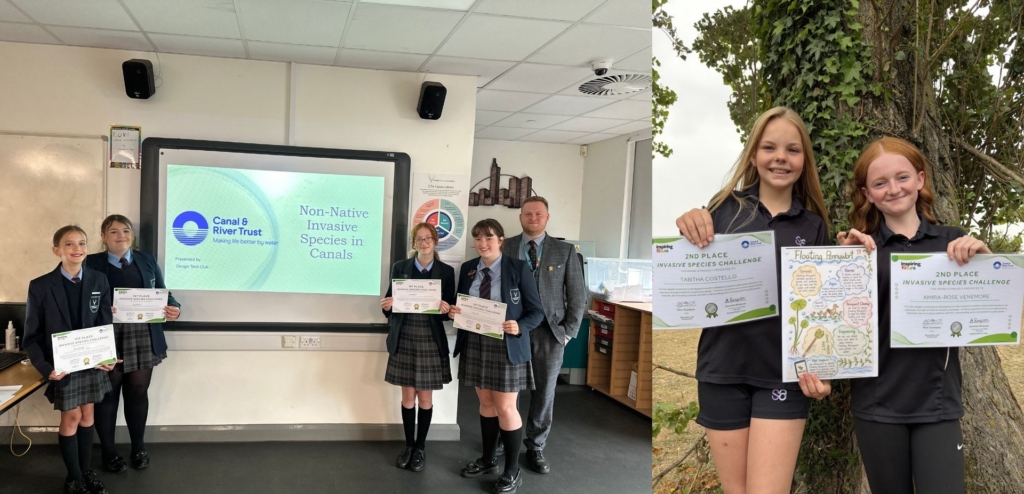
Participants were challenged to choose one of three approaches:
- Design a tool or technology to help identify, monitor or manage invasive species.
- Create an awareness campaign to educate others about the issue.
- Develop a community action plan to help prevent invasive species from spreading.
The response was outstanding, with 54 entries submitted by 131 students, demonstrating creativity, innovation and a strong understanding of environmental challenges.
Unlike the Key Stage 2 competition, entries at Key Stage 3 and above were judged individually, enabling students and teams to showcase their unique ideas and solutions. All participants received detailed feedback against the judging criteria, helping them understand the strengths of their submissions and identify opportunities to develop their ideas further.
STEM Skills in Action
This hands-on challenge provided students with an exciting opportunity to apply STEM learning in a meaningful context. Through research, design and problem-solving, participants explored the work of scientists, engineers, ecologists and conservation professionals while considering the challenges of protecting biodiversity and maintaining healthy waterways.
Students were encouraged to think critically about environmental impact, sustainability, practicality and community engagement, resulting in a diverse range of innovative and thought-provoking submissions.
Congratulations to Our Winners!
🥇 1st Place
Chase Terrace Academy Design & Technology Club
Himalayan Balsam Awareness Campaign
Prize: STEM-related trip worth up to £800
The judges were particularly impressed by the team’s ambition and real-world impact:
“Rather than simply proposing an awareness campaign, the students designed and delivered a genuine school-wide campaign, producing posters, tutor resources and assemblies that were used during Green Week. It demonstrated excellent understanding of the issue alongside real-world implementation and outstanding teamwork.”
🥈 2nd Place
Tabitha & Amira-Rose, South Axholme Academy
Floating Pennywort Project
Prize: £250 worth of STEM vouchers
The judges commented:
“A brilliant behaviour-change focused submission, combining a hand-held removal tool with the use of iNaturalist to support identification and monitoring. The project was well researched, beautifully presented and demonstrated excellent scientific understanding, creativity and a strong focus on encouraging public action.”
🥉 3rd Place
Team Green, The Duston School
‘Pondii’ – Water Fern Management Solution
Prize: £100 worth of STEM vouchers
Judges praised the team’s creativity and systems-thinking approach:
“A highly imaginative systems-thinking project centred around an autonomous robot (‘Pondii’) to remove Water Fern, combined with public engagement, social media and biomass reuse. One of the most creative engineering concepts submitted, with thoughtful consideration of both environmental and social impact.”
Inspiring the Next Generation of Environmental Innovators
From behaviour-change campaigns and engineering solutions to technology-enabled conservation projects, the quality and variety of submissions demonstrated the talent, creativity and problem-solving skills of young people across the country.
The challenge showcased how STEM can be used to address real environmental issues while helping students develop the knowledge, confidence and skills needed to become the scientists, engineers and conservation leaders of the future.
Congratulations to all those who took part, and thank you for helping to protect our waterways and native wildlife from invasive species.
Entries Gallery
Check out the winners’ entries here: KS3+ Invasive Species Challenge Winners’ Gallery